Robert van Gestel
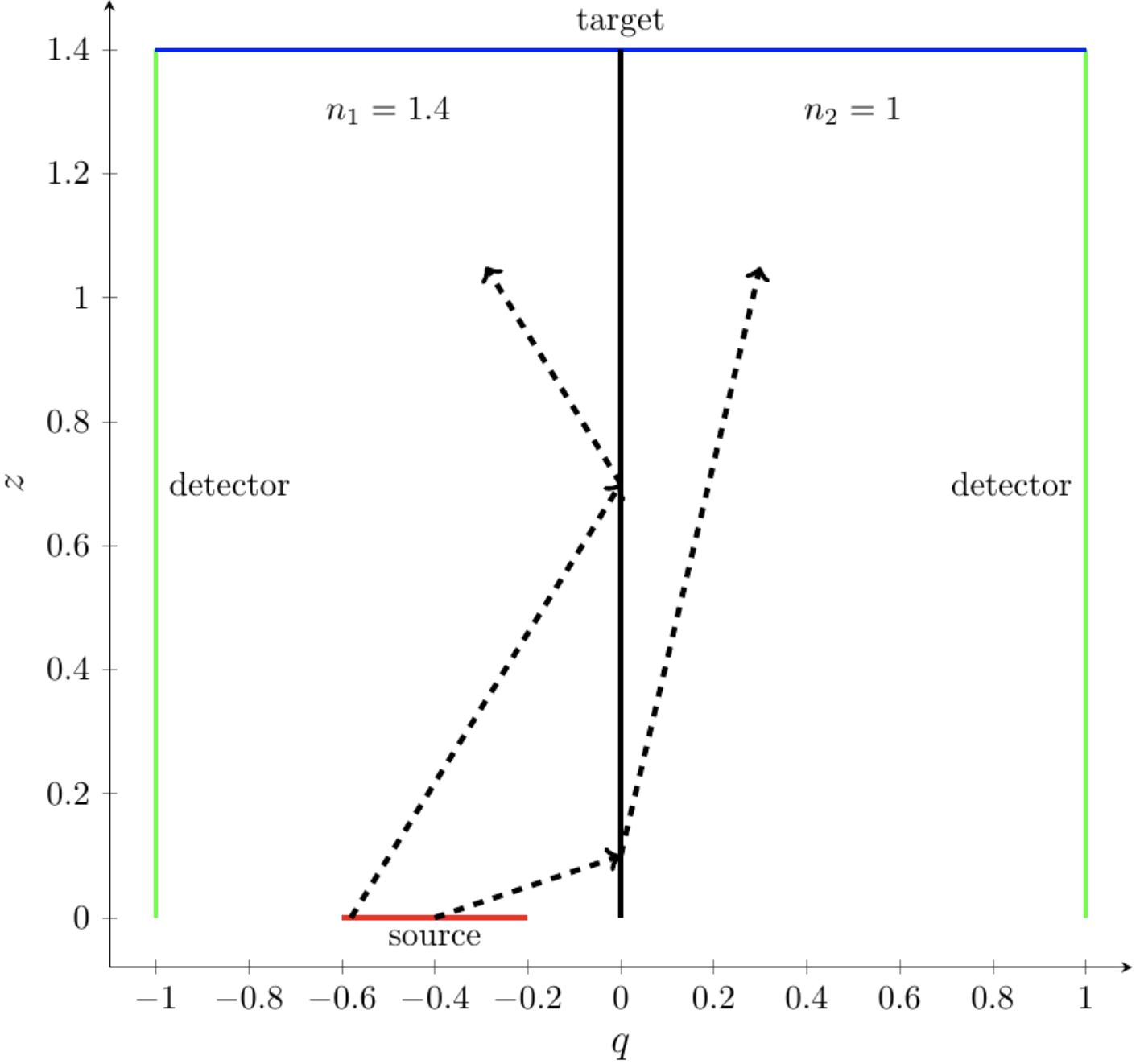
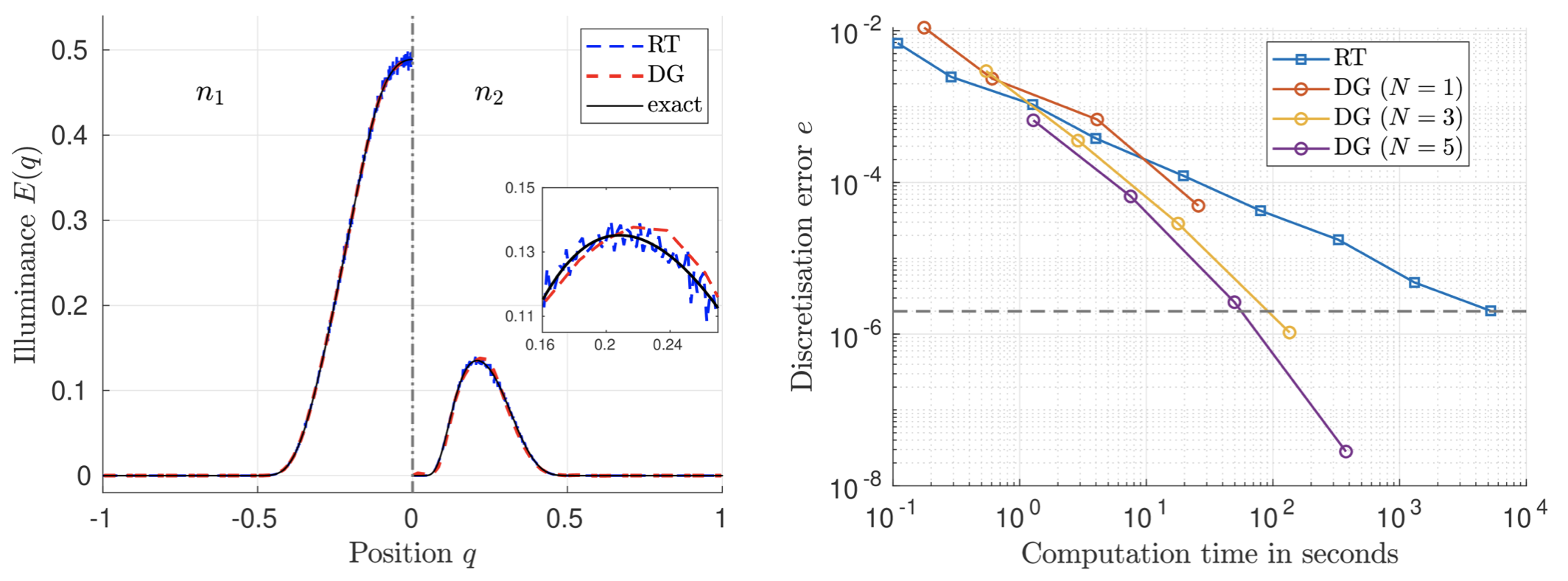
The standard method to simulate optical systems is ray tracing. This Lagrangian method requires a lot of rays to be traced in order to provide an accurate description. In this project we take an Eulerian approach and instead solve Liouville’s equation, which is a linear advection equation on phase space describing the propagation of energy carried by the rays. We solve Liouville’s equation using energy conservative high order methods, resulting in faster convergence than ray tracing.
Vì Kronberg
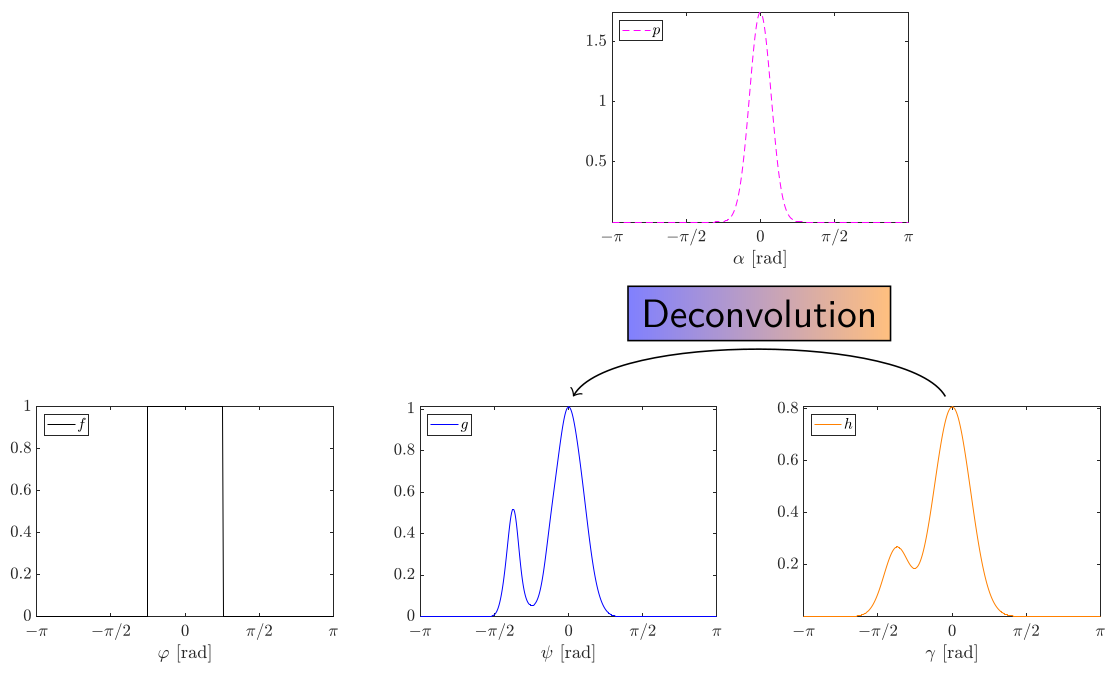
Many optical designers are restricted to working with the geometrical optics (GO) approximation, where light propagation is modelled using rays traversing in straight lines in a free medium, and obeying the specular law of reflection and refraction when interacting with a reflector surface and/or lens. The omission of scattering or diffuse reflection leads to discrepancies between the simulations and production samples. We add scattering to the GO approximation by considering deviations from the specular law of reflection, and in certain cases this yields a relatively simple convolution integral. One can then deconvolve said quantities to get an intermediate specular distribution such that diffuse problems can be treated using the Monge-Ampère least-squares solver.