
Maikel Bertens
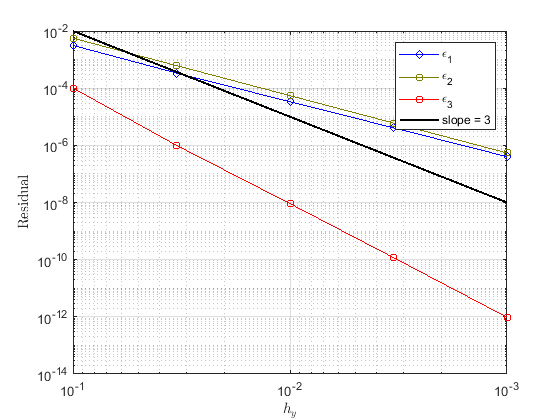
At the TU/e models are developed to design freeform optical surface which transport light of a source, e.g. a LED, to a desired target distribution, e.g. visual pleasing street lighting. Those methods rely on solving the elliptic Monge-Ampère equation. The ellipticity of this equation ensures the optical surfaces are convex, which puts limitations on the size of the optical system. Therefore I consider the hyperbolic Monge-Ampère equation, which does not produce convex optical systems and possibly yields more compact optical systems. Currently there is little known literature on the topic of the hyperbolic Monge-Ampère equation therefore a new framework based on the Method of Characteristics was developed. This framework enables us to formulate the hyperbolic Monge-Ampère equation as a system of strongly coupled ODE’s, which we solve numerically.


Lotte Romijn
Modern optical components in LED lighting systems are freeform (i.e., non-axially symmetric) reflectors and lenses that transform the light from the LED source into the required light output of the lighting system. One approach for the design of freeform optical surfaces uses the principles of geometrical optics and conservation of energy to derive a partial differential equation (PDE) for the location of the optical surface, which is a generalized Monge-Ampère equation. In my PhD research I have derived generalized Monge-Ampère equations for a range of optical systems involving parallel or point light sources, near- or far-field targets, and multiple freeform surfaces. We developed a general framework to rewrite the generalized Monge-Ampère equations as so-called generated Jacobian equations, which can be solved using a least-squares numerical algorithm. This has opened up new possibilities for system design.


Alex Heemels
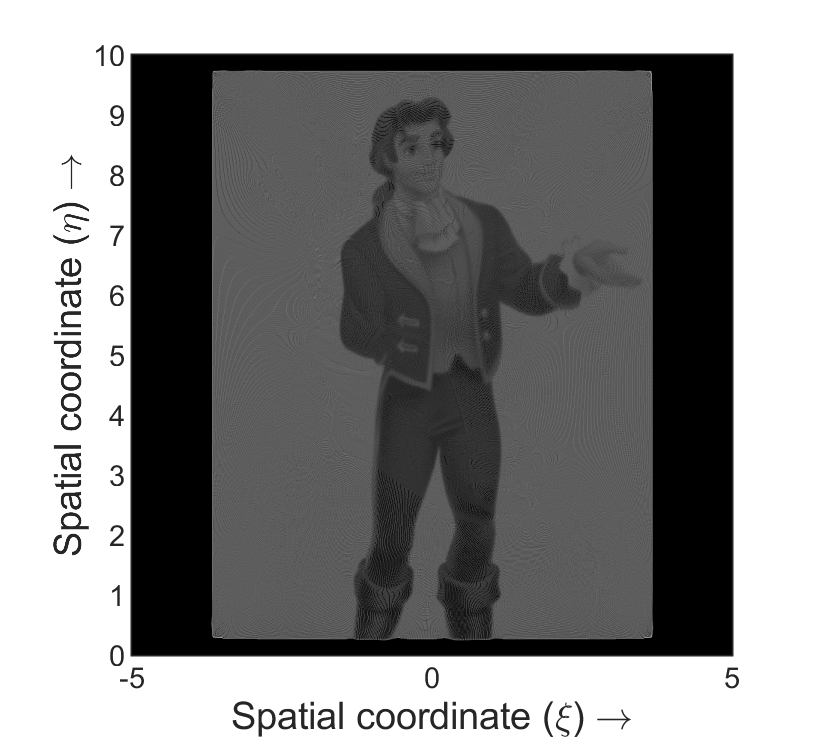
Light shaping problems such as computer generated holography, beam shaping and illumination design, are concerned with redirecting the light emitted by one or multiple sources into a desired light distribution at a target plane. This is generally achieved using diffractive optical elements, spatial light modulators or freeform optics. However, the methods shaping these optical systems are often limited to simple single-source configurations the most common being: normal incident plane waves. This limits the possible addition of extra sources, thus limiting the total light throughput of the system. As such, it is desirable to extend existing methods to be compatible with more general source configurations.
We focus on extending existing methods with a pre-processing step making it possible to use more general lighting configuration. This is achieved by determining the effect of source position on the obtained light distribution. Which in turn allows us to alter the light shaping system for optimal performance under the predefined lighting configuration.
The results of this research can be used to better control the light of street and indoor lighting and used in augmented and virtual reality systems.